Twin Faces in Land Deal


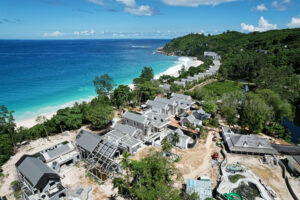
It had seemed a dream deal: fertile land in Africa at the dirt cheap price of 50 cents a year per hectare, when similar land in Malaysia was selling for $3,000 to $4,000 a hectare. Government tax breaks. Low wages. To environmentalists and local residents, the company that bagged this deal to replace rainforest with palm oil trees spoke of social responsibility. To investors, it spoke of huge profits and a quick exit. By David Hodes for 100Reporters.

Op-Ed: New Journo and the IRS


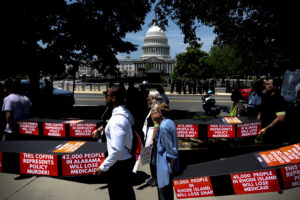
It's not just the Tea Party: Some 60 to 90 journalism operations, emerging to fill the void left by the collapse of the newspaper industry, are in limbo. Faced with an influx of applications, the IRS now takes 24 to 30 months to review requests for nonprofit status from journalism startups, up from 3 months in 2007. The victim in both instances: the First Amendment. Op-Ed in today's Washington Post by Sunlight Foundation's Kathy Kiely and Diana Jean Schemo of 100Reporters.

Transparency's Small Win


A United States Appeals Court has declined to hear a challenge to a new rule that requires companies in the extractive industries to disclose their payments to foreign governments. Led by the American Petroleum Institute and the U.S. Chamber of Commerce, the companies had argued that the law violates a right to free speech, by compelling them to disclose information that could be considered politically charged in the countries where they do business. The Securities and Exchange Commission had countered that companies must disclose financial information all the time, and this new rule, set to take effect next year, is no different. The case proceeds at a lower court. By Chad Bouchard for 100Reporters.

The Profits of Doom

by Blaz Zgaga / Published in Corruption | 1 Comment

A Muslim woman prays beside the coffin of her relative among 534 victims of the 1995 Srebrenica massacre. / REUTERS

As the nation once called Yugoslavia collapsed into a deadly maelstrom through the 1990s, the world largely stood mute in the face of unspeakable atrocities: ethnically-driven mass murders, concentration camps and rape as a weapon of war. Conventional wisdom blamed the Balkan nations for their own blood-soaked disintegration, which took more than 130,000 lives.

The principal stand against the horrors unfolding in the region came through the United Nations Security Council, whose members banned weapons sales to the region.

Now, nearly twenty years later, new facts are emerging that cast a different light on that narrative, and show that other nations had a hand in stoking the deaths and destruction that engulfed the Balkans. [Full Article]

The Mad Dash for Land

by Diana Jean Schemo / Published in Corruption | 1 Comment

A farmer in Uganda / REUTERS

It is being called the new “resource curse.”

Throughout the developing world, a global land rush is in full throttle. Agricultural companies, biofuel and timber concerns, investment groups and governments eager to insure food supplies for their citizens are driving a virtual frenzy to buy up rights to arable land, especially in Africa.

But the deals, while massive in scale, are coming under heavy criticism for a lack of transparency, and for spreading hardship and poverty instead of alleviating them. And the World Bank, which has been among the most eloquent critics of these deals, is at the same time midwife to many of them. [Full Article]

The Conflict Over Conflict Minerals

by David Stout / Published in Corruption | 1 Comment

A 12-year-old Congolese girl, uprooted by war, holds her little brother. / REUTERS

Fifteen months after President Barack Obama hailed the Dodd-Frank Act as a mighty weapon against reckless excesses on Wall Street, the measure is sparking fierce debate for a far different reason: Its effort to clamp down on “conflict minerals” which are found in everyday objects, but which are often linked to brutal African conflicts and dictators.

It may seem a far stretch for a law aimed at cleaning up Wall Street to also take on the trade in minerals from the war-torn Democratic Republic of Congo. That it does is setting off fierce debate that pits human rights activists against some of the most powerful business interests in Washington.

In addition to its myriad regulations covering the banking and financial industries, the Dodd-Frank law also intensifies government oversight of the multibillion-dollar-a-year trade in oil, gas and minerals. It requires American oil and gas companies to publicly disclose payments to foreign governments. And it obliges companies in the extractive industries to demonstrate “due diligence” in determining whether or not the minerals they buy are linked to brutal conflicts in Congo and its neighbors in Central Africa. [Full Article]

Venezuela’s Vanishing Billions

by Maria Pallais / Published in Corruption | 9 Comments

Hugo Chavez and Daniel Ortega, with Simon Bolivar presiding. / VENEZUELAN PRESIDENTIAL PRESS OFFICE PHOTO

Nearly $30 billion is missing from a Venezuelan national development fund controlled by President Hugo Chávez, who appears to have diverted some of the missing money to his political allies in other countries, while much of the rest remains unaccounted for.

The money came from a $69.4 billion fund for development aid, known as Fonden, which is designed to take public money, largely from Venezuela’s state-run oil company and its Central Bank, and use it on domestic development projects such as highways, schools, factories and hospitals.

For years in Venezuela, critics of the president have nicknamed Fonden “Chávez’s slush fund.” Information only now becoming public shows that is not far off the mark: El Fondo de Desarrollo Nacional, as it is formally known, operates outside the Venezuelan National Assembly’s budget process and largely beyond public scrutiny, answerable only to a board of directors and to Chávez himself. [Full Article]

Where the Spirit of Inquiry Ends

by Noya Kohavi / Published in Corruption | Leave a comment

Protesters target a land deal by the Prime Minister, benefactor of Lawrence Technological University in Michigan

Seven months ago, as Muammar el-Qaddafi moved to crush the first stirrings of democratic protest in Libya, the London School of Economics came under intense pressure to give back a $495,000 gift tied to the now-dead leader’s son, Seif al-Islam. The prestigious school’s director, Sir Howard Davies, stepped down in disgrace, apologizing for “an error in judgment.”

But a far larger donation from the Libyan government to American University in Washington, D.C. went largely unnoticed, as have multi-million dollar gifts to American and other universities from officials in Bahrain. That country has killed 42 pro-democracy protesters and arrested more than 1,600, about 500 of which still detained‫,‬ in its own brutal crackdown so far this year. Saudi Arabia, which sent military forces to battle protestors in Bahrain and elsewhere, has also donated millions of dollars to American universities, including Harvard, M.I.T., Georgetown and others.

The donations, which U.S. institutions of higher education are required to report to the government, show that universities regularly accept gifts from leaders that brook no opposition and their family members, ignoring questions of corruption and human rights violations. Rather, universities appear largely unconcerned by the provenance of the money they accept. [Full Article]