Op-Ed: New Journo and the IRS


It's not just the Tea Party: Some 60 to 90 journalism operations, emerging to fill the void left by the collapse of the newspaper industry, are in limbo. Faced with an influx of applications, the IRS now takes 24 to 30 months to review requests for nonprofit status from journalism startups, up from 3 months in 2007. The victim in both instances: the First Amendment. Op-Ed in today's Washington Post by Sunlight Foundation's Kathy Kiely and Diana Jean Schemo of 100Reporters.

Transparency's Small Win


A United States Appeals Court has declined to hear a challenge to a new rule that requires companies in the extractive industries to disclose their payments to foreign governments. Led by the American Petroleum Institute and the U.S. Chamber of Commerce, the companies had argued that the law violates a right to free speech, by compelling them to disclose information that could be considered politically charged in the countries where they do business. The Securities and Exchange Commission had countered that companies must disclose financial information all the time, and this new rule, set to take effect next year, is no different. The case proceeds at a lower court. By Chad Bouchard for 100Reporters.

Left Out


In the world of international corruption, researchers and watchdogs are wrestling with an awkward truth: only a smidgen of the billions of dollars in stolen assets that are recovered through government investigation and prosecution ends up back in the countries from which they were taken. In many cases, settlements are negotiated without the knowledge of countries where the crimes took place. A 100Reporters exclusive by Chad Bouchard.

College Students Face New Voting Barriers

by Jack Fitzpatrick / Published in Corruption | Leave a comment

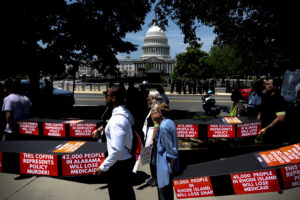
Who’ll get to vote? A wave of new voter identification laws are sowing obstacles to voting for many young people, and may violate Constitutional protections. / REUTERS

By Jack Fitzpatrick
News21


Morehouse College students can use their ID cards to buy food and school supplies, use computer labs and get books from the library, but they can’t use ID from the historic Atlanta school to vote. A few miles away, Georgia State University students use their ID in the same way, but their cards allow them to vote.

Across the country, college students are facing new questions about their voting rights. In some states, communities are debating whether students can vote as state residents or vote absentee from their hometowns. In others, legislators have debated whether student IDs can be used at the polls.

In Georgia, the debate started with the state’s voter ID law, which accepts student IDs from state colleges but not private institutions such as Morehouse.

College students, who led a record turnout among 18- to 24-year-old voters in 2008, could play a major role in this November’s elections, but their impact could be blunted by states’ voter ID requirements. [Full Article]

Photo I.D. Laws Tied to Conservative Washington Group

by Ethan Magoc / Published in Corruption | Leave a comment

A raft of voter i.d. laws sweeping the country, which threatens to disproportionately disenfranchise the poor, minorities and students, is being drafted by the American Legislative Exchange Council, a conservative nonprofit organization. / REUTERS

By Ethan Magoc
News21


A growing number of conservative Republican state legislators worked fervently during the past two years to enact laws requiring voters to show photo identification at the polls.

Lawmakers proposed 62 photo ID bills in 37 states in the 2011 and 2012 sessions, with multiple bills introduced in some states. Ten states have passed strict photo ID laws since 2008, though several may not be in effect in November because of legal challenges.

A News21 analysis found that more than half of the 62 bills were sponsored by members or conference attendees of the American Legislative Exchange Council (ALEC), a Washington, D.C.-based, tax-exempt organization.

ALEC has nearly 2,000 state legislator members who pay $100 in dues every two years. Most of ALEC’s money comes from nonprofits and corporations — from AT&T to Bank of America to Chevron to eBay — which pay thousands of dollars in dues each year.

[Full Article]

Despite Hype, Voter Fraud Extremely Rare in U.S.

by Natasha Khan and Corbin Carson / Published in Corruption | Leave a comment

South Carolina has enacted highly controversial voter identification laws, but an investigation shows that voter fraud is virtually non-existent in the U.S. / REUTERS

By Natasha Khan and Corbin Carson

News21


A News21 analysis of 2,068 alleged election-fraud cases since 2000 shows that while fraud has occurred, the rate is infinitesimal, and in-person voter impersonation on Election Day, which prompted 37 state legislatures to enact or consider tough voter ID laws, is virtually non-existent.

In an exhaustive public records search, News21 reporters sent thousands of requests to elections officers in all 50 states, asking for every case of fraudulent activity including registration fraud, absentee ballot fraud, vote buying, false election counts, campaign fraud, casting an ineligible vote, voting twice, voter impersonation fraud and intimidation.

Analysis of the resulting comprehensive News21 election fraud database turned up 10 cases of voter impersonation. With 146 million registered voters in the United States during that time, those 10 cases represent one out of about every 15 million prospective voters.

“Voter fraud at the polls is an insignificant aspect of American elections,” said elections expert David Schultz, professor of public policy at Hamline University School of Business in St. Paul, Minn.

“There is absolutely no evidence that (voter impersonation fraud) has affected the outcome of any election in the United States, at least any recent election in the United States,” Schultz said.

[Full Article]

Fat-Melting Device a Weighty Matter for FDA

by Myron Levin and Stuart Silverstein / Published in Corruption | 2 Comments

Doctors and aestheticians around the country are using this device on overweight patients, claiming it melts fat. Despite claims to the contrary, its sales have not been approved by the FDA. /iStock Photo


By Myron Levin and Stuart Silverstein


For several years, doctors and medical spas around the country have touted a fat-melting device called the LipoTron 3000, or Lipo-Ex, as a revolutionary way for people to slim down.

Signature Medical Spa in Tampa, Fla., in an online pitch for its “Lipo-Ex Spring Fling Fat-Off!,” described the technology as “truly the only non-invasive way to reduce fat.”

Praise also came from Sculpt Medical Spa in Chicago, which called the procedure  “the most innovative, effective, and technologically advanced” non-surgical method of removing fat.

Doctors have appeared on TV news shows in Houston, Phoenix and Miami to promote LipoTron treatments.

These testimonials have translated into millions of dollars in sales for physicians,  med spas, and the device’s manufacturer, RevecoMED International of Fullerton, Calif.

But there’s a problem: The LipoTron, which targets fat with radiofrequency waves, has never been cleared or approved by the U.S. Food and Drug Administration, which would make it illegal under federal law to sell or promote it for weight loss.

[Full Article]

Fast Track Past Red Flags

by Ken Silverstein / Published in Corruption | Leave a comment

Eurasian Natural Resources Corp. warned British authorities of suspected corruption behind its deal to purchase a major copper and cobalt mine in the Democratic Republic of Congo. / REUTERS

An international mining company that is coming under growing scrutiny for its business practices alerted a British government agency that its impending purchase of a major cobalt and copper mine in the Democratic Republic of Congo may have involved corruption, but anti-corruption authorities did nothing to block the deal, which soon went through.

As disclosed by 100Reporters last week, the mining firm — Eurasian Natural Resources Corporation – filed a Suspicious Activity Report to a British law enforcement agency two years ago. The report acknowledged multiple “red flags” indicating that an Israeli businessman who sold it the Kolwezi mine may have bribed Congolese officials when he originally obtained it. [Full Article]