In recent years, the U.S. government has taken unprecedented steps to crack down on bank secrecy abroad and to begin calling foreign kleptocrats to account.
In February, the Justice Department indicted Switzerland’s oldest private banking house, Wegelin & Co., on charges it hid some $1.2 billion in American assets, allowing account holders to avoid paying U.S. taxes. A month later, amid unrelenting pressure from Washington, the Swiss parliament modified notoriously secretive banking laws.
But the aggressiveness of U.S. officials toward offshore tax shelters overlooks a problem closer to home: domestic tax havens. The secrecy laws in a handful of states, including Wyoming, Nevada and Delaware, rival those of countries with the worst reputations for harboring criminal assets and concealing the ill-gotten gains of corrupt officials, from Britain’s Cayman and Channel Islands to Belgium to Luxembourg.
Two pieces in this week’s New York Times, written by 100Reporters’ Leslie Wayne and Ken Silverstein, explore the problem and potential solutions.
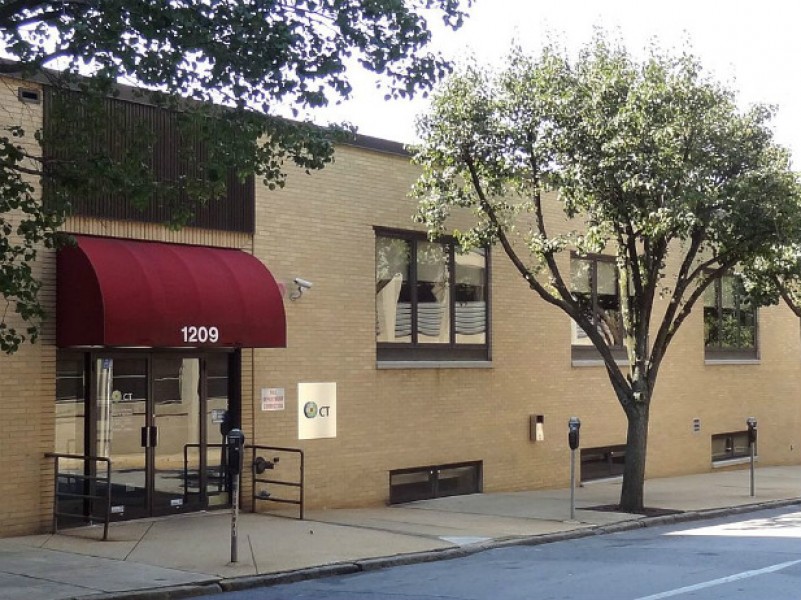
 As senior editor Leslie Wayne reported in Sunday’s Times, a single address in Delaware is the registered home to 285,000 businesses, including “giants like American Airlines, Apple, Bank of America, Berkshire Hathaway” and others. It was also home to Timohty S. Durham, “the Midwest Madoff,” convicted of swindling some 5,000 middle-class investors of $207 million. Viktor Bout, the convicted Russian arms dealer, incorporated his business in Delaware as well.
“Big corporations, small-time businesses, rogues, scoundrels and worse – all have turned up at Delaware addresses in hopes of minimizing taxes, skirting regulations, plying friendly courts or, when needed, covering their tracks,” Wayne writes. “Federal authorities worry that, in addition to the legitimate businesses flocking here, drug traffickers, embezzlers and money launderers are increasingly heading to Delaware, too. It’s easy to set up shell companies here, no questions asked.”
In an op-ed that ran in Tuesday’s Times, 100Reporters’ contributor Ken Silverstein noted that in Delaware and the other domestic U.S. tax havens, corporations are not required to provide the name of the “beneficial owner,” the person for whose benefit the shell company is being established. That has made the U.S. the “top destination for corrupt politicians trying to set up shell companies to access the financial system,” Silverstein writes.
“Dictators and despots can therefore easily hide their assets: instead of buying property in their names, they instead will buy a mansion owned, for example, by a Panamanian trust controlled by a Bahamian corporation that’s run by a company registered in Lichtenstein.”
Justice Department officials will try to peel through those layers of secrecy as they go after the assets of Teodoro Obiang Nguema, son of the president of Equatorial Guinea. Obiang, who is also known as Teoadorin, managed to amass a fortune while on a modest government salary, splurging on an $80 million Paris mansion and one worth $30 million in Malibu, as well as a $38 million personal jet.
Silverstein notes that U.S. Senator Carl M. Levin, the Michigan Democrat, has repeatedly introduced bills that would force states to disclose the beneficial owners of companies they register to do business. The bill has faced unwavering opposition from the U.S. Chamber of Commerce, the American Bar Association, and, of course, the State of Delaware.
About The Author