By Estacio Valoi and Evelyn Groenink
What does legal victory look like when the perpetrators are never punished, the land remains off-limits to locals, and the lawyers have long since moved on to their next case? In Montepuez, in northern Mozambique, we now know the answer. In 2019, after years of documented killings, beatings, and forced removals tied to the ruby mining operations of the multinational Gemfields, 273 local villagers received financial settlements, thanks to a British law firm. It was hailed as a triumph. But the rubies are still being mined, the violence has not stopped, and the people of Montepuez are still waiting for something the settlement was never designed to deliver: justice.
Villagers who received damages
Year of settlement
Individual pay-out range
Very little has changed in Montepuez since the lawsuit. Gemfields Group LTD, with its London head office and its local ruling party co-owners, still guards its concession avidly. Poverty reigns behind the “forbidden to enter” gates.
Villagers trying to dig for gemstones on the land of their birth still risk being shot by special forces. Other means of earning a living remain scarce after, a decade ago, locals were uprooted from farms and shops to make space for the mining concession.
In 2019, 273 inhabitants of Montepuez received substantial damages pay-outs from a class action lawsuit brought on their behalf by the London law firm Leigh Day against Gemfields, which mines rubies in the Montepuez region.
Leigh Day and others heralded the court victory as a major triumph of right over wrong, though Gemfields did not admit culpability. The money, not enough, several villagers claim, came and went, and exploitation and violence continued.
A similar lawsuit also failed to bring “lasting, systemic change” in Malawi. There, in 2021, a class action against UK-based tea companies over the sexual abuse of tea pickers by supervisors also won in the UK.
Despite legal settlements and promises of reform, women there continue to face harassment, coercion, and violence. The systemic abuse, long hidden behind the veil of Malawi’s booming tea industry, remains a painful reality for hundreds of women, our colleagues at the Platform for Investigative Journalism report.
Beneficiaries in both countries report either neglect or further victimization by local authorities, as well as by criminals and con men who came to "help" the often illiterate recipients with their bank papers.
In Malawi, women who had received money were rumoured to be witches and Satanists, a situation exacerbated by non-disclosure agreements forbidding them from speaking about the rapes. Neither the police nor the labour department ever took an interest in their complaints, either before or after the law firm’s intervention.
The minister who had been in charge of the Labor Department when the abuses cited in the Leigh Day lawsuit were committed, Vera Kamtukule, shouted at the journalist who questioned her: “You betray Malawians! This kind of news endangers our industry of 60,000 workers!”
In Mozambique, police, politicians and members of the secret service accused beneficiaries of being “terrorists,” claiming that their pay-outs had come from insurgents known as “Mozambican Al Shabab.” A 2024 uprising against the corrupt government saw recently acquired housing, small farms and vehicles go up in flames.
In Mozambique, beneficiaries were accused of being terrorists.
In both countries, there were unwise purchases too, made by people who had never handled more money than was needed to buy bread or a few vegetables. But that is the argument used by the corporates, says Daniel Leader, a partner at Leigh Day, that we “must not give poor people money because that will upset the community.” Leader specializes in environmental and corporate responsibility cases.
“We thought they should have that training, and we had a local NGO in place to facilitate it, but the beneficiaries all refused when they were told it would cost them a small portion of their damages payments,” says Leigh Day’s Daniel Leader.
Leader admits that it was perhaps to be expected that people would feel unwilling to accept such a deduction. “But we could not help that. There was no pot of money made available by Gemfields for this, so it had to come from the payments.”
“We now make sure that money for this purpose forms part of any new settlement we negotiate.”
The same managers, supervisors and police officers still hold power.
"As long as justice systems in such countries remain corrupt, we see no other way to secure restoration than to hold the corporates to account in their own jurisdiction."
— Daniel Leader, Leigh Day
Class action lawsuits are Leigh Day’s bread and butter. The firm presents itself proudly as human rights lawyers, seeking out communities, often in Africa, whose environment and livelihoods have been damaged by UK-based multinationals. Their cases resound with descriptions of suffering, supported by testimony from doctors, trauma experts and psychiatrists. Some of their signage reads: “Lawyers Against Injustice.”
But a group of locals in Montepuez, six years on, say they are back at square one. The group of around 20 former beneficiaries has complained, saying they did not receive all that had been promised, that deductions were made of which they had not been informed, and that they are still awaiting final tranches of payment.
— Daniel Leader, Leigh Day
Much of the anger centers on what they see as a 21.2 per cent deduction for Leigh Day’s fees, whereas they say they had been promised a deduction limited to 17.5 per cent. Leigh Day strenuously denies this, explaining they were legally entitled to as much as 25 per cent. Calculating the GBP deduction from the gross amount before it left London, ZAM magazine finds the firm is correct: it is 17.5 per cent. The group’s complaint may be related to currency conversion losses by the time the payment was made in meticals, the currency in Mozambique.
Ten selected victims from Namanhumbir. The effective cost percentage of 21.2% — as experienced by claimants — versus the contracted 17.5% reflects the impact of currency conversion and bank charges applied before and after payment reached Mozambique.
— Estacio Valoi
| # | GBP Compensation | Compensation (MZN) | Costs (GBP) | Eff. % Costs | % Potential Costs |
|---|---|---|---|---|---|
| 1 | 4,578.09 | 357,071.00 | 971.11 | 21.2% | 17.5% |
| 2 | 2,928.09 | 228,391.00 | 621.11 | 21.2% | — |
| 3 | 7,320.23 | 570,978.00 | 1,552.78 | 21.2% | — |
| 4 | 21,858.54 | 1,704,966.00 | 4,636.66 | 21.2% | — |
| 5 | 1,650.00 | 128,700.00 | 350.00 | 21.2% | — |
| 6 | 24,786.00 | 1,933,352.00 | 5,257.77 | 21.2% | — |
| 7 | 2,382.02 | 185,798.00 | 505.28 | 21.2% | — |
| 8 | 2,235.62 | 174,378.00 | 474.22 | 21.2% | — |
| 9 | 2,118.49 | 165,243.00 | 449.38 | 21.2% | — |
| 10 | 5,856.18 | 456,782.00 | 1,242.22 | 21.2% | — |
Source: Values extracted from the individual contracts of the victims. Table composed by Rural Environment Observatory / Jerry Maquenzi, Montepuez.
The locals call the lawyers their 'bosses'.
They have never seen the lawyers’ glass-walled offices in London, from which they came. “Our bosses,” they call them, for what else do you call people who hand you contracts stating the amounts they promise to pay? They have kept those contracts safe, through rainstorms and the smoke of charcoal cooking. One contract was even rescued from a fire, the burn holes still visible.
Estacio Valoi has consistently documented the locals’ lives under siege by the mining operation. Many locals see him as the one accessible point of contact that remains. “They phone me night and day,” Valoi says.
Now, while the lawyers have long since returned to their offices and their next cases — “we can’t respond within a week because the person who dealt with this is now in Nigeria” — it is once again Valoi who channels the group of Montepuez villagers’ continuing despair.
“They were hoping for justice and human rights, but what they got was some business, and then it stopped,” he says. “It’s good that the people received some money, but there has to be another way. Why are the murderers still in power in Montepuez?”
The secret service demanded all the papers.
Leigh Day typically demands the establishment of Operational Grievance Mechanisms within the companies with which it reaches settlements — virtual post boxes through which victims can continue to report abuses, monitored by independent experts. But do villagers in Montepuez still use them?
“There was a box where people could post complaints, but they stopped, I think,” is what Valoi knows. “The reality is that people just phone me and the journalists’ crew that works with me. Just us. They have been phoning us for years.”
Asked whether Leigh Day might consider a legal fund from which local lawyers could pursue follow-up actions, Daniel Leader questions whether these “will be successful in justice systems like in Mozambique.” “If you work with local lawyers, in a local-foreign partnership, taking both sides on and going to court in both places, you can be successful,” insists Valoi.
We leave the interview thinking that perhaps a new model for class action lawsuits could be developed. At least, that is what our white half, Evelyn Groenink, thinks. But the Mozambican half doubts.
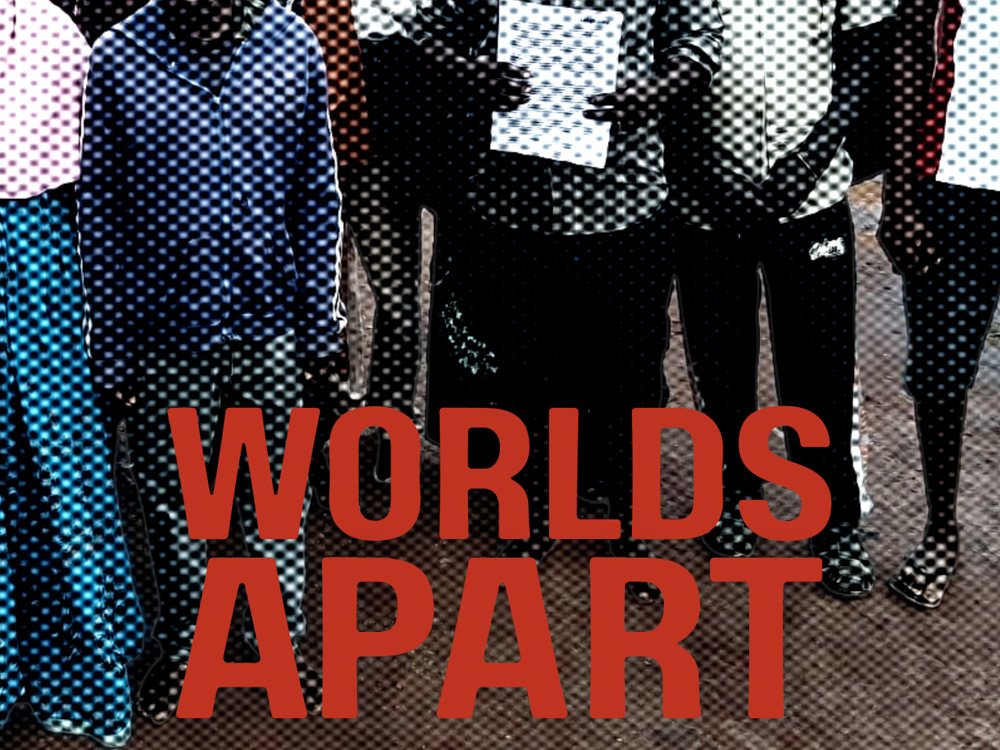
Though the Montepuez complainants’ group came forward saying they wanted to be heard, interviewed and photographed, ZAM was advised by Leigh Day that there is a court anonymity order in place protecting the identities of all beneficiaries of the lawsuit. Following the court order, ZAM has made individuals in photographs unrecognizable.
Registered office: Panagram, 27 Goswell Road, London EC1M 7AJ. Leigh Day is a partnership authorised and regulated by the Solicitors Regulation Authority. SRA number 67679.
The above essay was originally published in ZAM magazine.
After co-founding the Forum for African Investigative Reporters (FAIR) together with colleagues from several African countries in 2003, Evelyn Groenink went on to become investigations editor at ZAM, www.zammagazine.com, in the Netherlands. In that capacity she now works with FAIR’s successor, the Network of African Investigative Reporters and Editors. The network continues to publish investigative stories and transnational investigative projects from the African continent.



Fitah, 32, Somalia
Fitah has been a refugee for ten years but has only been in Brazil for a few months. After leaving his home country in 2007 due to the civil war, he went to South Africa, where he stayed until March 2017. Paying $4,000 USD to smugglers in Johannesburg, he managed to enter Brazil posing as a South African refugee. He wanted to travel on to the United States, but the “travel package” offered by his smugglers only gave him two options, Turkey or Brazil. He chose the latter.
Afonso, 28, Congo
Upstairs in one of the big bedrooms of the Scalabrinian Mission Afonso, a 28-year-old migrant from Congo, explained how he came from Kinshasa in 2015 by boat, escaping from the violent conflicts raging in his own country. He hired the service of smugglers and came on a cargo ship with a number of others. He paid for part of the trip by working on the ship. He was left in the coast of Santos, a city 55km away from Sao Paulo. He is now searching for a job.
“K.”, 39, Sierra Leone
At Caritas, a non-profit providing support to refugees and migrants, we met “K” (who asked not to reveal his full name), who had left Sierra Leone three months ago. His grandfather was a chief priest of a secret society for whom it is a tradition to initiate the oldest son of the family when the former elder dies. A Christian and a graduate in Information Technology, “K” refused to take part in the ritual and says he was then targeted. He fled to stay with family in the interior of the country, but was kidnapped and held captive in the forest. One night he managed to escape to the city and met a woman from a Christian organization which provided airplane tickets so he could leave immediately for Brazil.
Jorge, 25, Guinea-Bissau
Jorge is a trained engineer who came to Brazil two years ago, who is now selling counterfeit and smuggled clothes in a local market. His Brazilian girlfriend is now pregnant and he is waiting for a work permit in order to get a job as mason. He said that when Federal Police went to his home address to confirm he was living there - an essential step in the process of issuing a work visa to a migrant - his house mates thought they wanted to arrest him and denied he lived there. It delayed his chance of getting a permit that would allow him a legal and better-remunerated job. The lack of trust in Brazilian law enforcement is a huge issue among refugees and migrants, many say that they rarely provide help or support, but instead only make their lives more difficult.
Abu, 37, Senegal
In República Square in the downtown Centro neighbourhood, African migrants sell clothes - some of them counterfeit designer wear,, some not - and handicrafts. Abu, 37, from Thiès in western Senegal, came to Brazil in 2010 with the hope that World Cup would make Brazil a prosperous country and offer him a new life. He says migrants should be respected for having the courage to leave everything behind and restart from nothing. Discrimination and lack of jobs are an issue for Abu, so he says his plan now is to save money and go to Europe as soon as possible. When he first arrived, he had money to stay in a hotel for seven days. After that, he met people who got him a job as a street vendor for contraband and traditional Senegalese clothes sewn in Brazil with African fabrics. Every time the police come and seize the goods he sells, it can take up to five months to recover the money lost.
Ibrahim, 41, Senegal
Members of the Senegalese community gather in República Square every week for a party, mounting up their own sound system, bringing drums and singing. On the night we visit around 50 people were dancing and chanting traditional Senegalese songs. Later they take a seat and discuss issues important to the community. Ibrahim, one of the group, has a talent for sewing fake Nike and Adidas logos to clothing in an improvised atelier nearby. Although he is a professional tailor and prefers to dedicate his time to his own original work, he says financial pressures meant he was forced to join the market of counterfeit designer-label clothing.
Guaianazes street, downtown Sao Paulo
On Rua Guaianazes there is a run-down mosque on the second floor of an old and degraded building, which is frequented by many African migrants. Outside, the smell of marijuana and cheap crack is inebriating. Crowds gather on the streets in front of the packed bars, while different people ask us if we want cheap marihuana. We enter one bar that has literally no chairs or tables: there is a poster of Cameroon’s most famous footballer Samuel Eto’o on the wall, and a big snooker table in the centre while all around customers gamble, argue and smoke. The bar tender tells us it is a Nigerian bar, but that it is frequented by Africans of all nationalities. Among the offers of cheap marijuana, crack and cocaine, laughs, music and loud chat, you can barely hear to the imam's call. Rua Guaianazes is considered to be the heart of Cracolandia, a territory controlled by organized crime for more than a decade and now reportedly home to some African-led drug trafficking gangs.
Santa Efigenia neighbourhood
Santa Efigenia is an area of around ten street blocks in the heart of the Centro area where locals says you “won't find anything original product or any product that entered the country legally”. There are dozens of galleries with local merchants, migrants and hawkers selling their wares, and crowds shouting and grabbing to sell counterfeit and contraband electronics late in the night. When we visited, a homeless old man was setting a campfire out of trash to heat himself on the corner, the people passing by aggressively yelling at him due to the black smoke his improvised urban survival mechanism was generating.
“H”, 42, Angola
“H” is an Angolan woman now living in a house rented from the Baptist church. The area outside the house is a “boca de fumo” - an open drug dealing spot managed by armed guards. “H’s” house is annexed to the church building itself, and is very rustic and simple. She arrived a year ago with two of her children, and also pregnant. She says that after the family of the Angolan president took over the market of smuggled goods in her country, her small import business started to crumble. Her husband and two more daughters are still there. She is currently unemployed, but happy that her young son is studying, although often he comes home complaining about racism at school. “H” does not want him to play with the neighbourhood children, she is afraid he will be drawn to narco-trafficking if he gets in with the wrong crowd. In the long run, she wants to go back to Angola, but only under “a different political situation.”
Lalingé restaurant, Sao Paulo
Arami, the owner of the bustling restaurant Lalingé – which means “The Princess” in her language – has been in Brazil for seven years. She opened the restaurant a year ago so that the African community in the Centro neighbourhood has a place to gather and eat food from their continent. It’s the kind of place people arrive at any time of the night or day, order their food and chat.
Scalabrinian Mission, Canindé neighbourhood
The Scalabrinian Mission in the neighborhood of Canindé provides philanthropic aid to migrants. Soror Eva Souza, the director, says they have helped people from Africa (Angola, Congo, Guinea, Togo, Nigeria, South Africa, Mali, British Guyana, Somalia, Mauritania, Sierra Leone, Cameroon and Uganda), North Africa and the Middle East (Syria, Tunisia, Morocco, Egypt), Asia (Cambodia, South Korea, the Philippines, Bangladesh), Europe (The Netherlands, Russia, France) and Latin America and the Caribbean (Colombia, Venezuela, Bolivia, Haiti, Cuba). The Mission provides housing, food, clothing, medication and facilities for migrants. They only receive a small amount of financial support from local government, but work to help migrants find a job so they can live independently. Souza says many of those who arrive at the house are ill: some are seriously injured, others sick from the journey or the conditions they were living in before arriving in Sao Paulo. Since 2015, she says she has seen human trafficking and slavery victims, drug mules, political refugees, and people who have lost their families en route. When we visit 40-year-old Mohamed Ali, from Morocco, was trying to find a job with the support of the Mission.
Clement Kamano, 24, Guinea-Conakry
Kamano was studying Social Sciences at Université Général Lansana Conté when he took part in the protests of September 28th, 2009, which ended up in a massacre with more than 150 people killed. Afterwards, he was repeatedly harassed because of his involvement in social movements. Fearing he might be killed, his father bought him a ticket to Brazil. Now he is a political refugee, who is almost fluent in Portuguese, and who enjoys talking about the sociologist-philosophers Emile Durkheim and Max Weber, even Leibniz and Nietzsche. He is currently applying to join a federal university in Sao Paulo.
What’s “cereza” in Arabic?
In a bright classroom in the centre of Quito, a group of students sit around a whiteboard. “Yo veo la televisión con mis amigos en la tarde,” they repeat after the teacher, “I watch television with my friends in the afternoon.” “Yo tomo el bus par ir al trabajo,” “I take the bus to go to work.”
Around the table are two Syrians who fled the war, one Cameroonian who says he wanted to escape the Anglo-French conflict in his homeland, two Afghans, one a former top-ranking police officer, an Egyptian and a Sri Lankan who wanted to go anywhere where he could make enough money to help his family. Migrants who arrive in Ecuador from Africa, Asia and the Middle East face a steep learning curve: it might be relatively easy to enter the country, thanks to Ecuador’s liberal open-border policy, but finding work here and learning Spanish can be difficult. Today their teacher is translating between Arabic, Spanish and English. “Market”? asks one. “Souk” replies another member of the group, while a fellow student does a quick translation into Pashtu.
Experts say some of those who come through language centres like these are planning on continuing their journey north, others on staying in Ecuador.
A little piece of Nigeria, in Quito
As the night closes in, Grace, a 25-year-old law graduate from Cameroon, dashes between a barbeque out on the street and the kitchen in the small Nigerian restaurant where she is working the night shift, as a television showing an African football league plays in the background. She wears a dark top, and her hair pulled back, as she fans the tilapia grilling on the coals. When she was denied a Canadian visa, despite having a scholarship, she decided she still wanted to leave Cameroon, where she complains of a lack of jobs and opportunities for the country’s English-speaking minority. With three friends, she bought a ticket heading west for Ecuador where she heard she could enter with her invitation to study at a language school. She soon converted to a missionary visa, and now works here and sings in the choir at a church up the hill, teaching Sunday school at the weekends. Like many of her customers, she also wants to travel north to the US or Canada, but only with the correct papers. “If you go without papers and through the jungle, you might be lost. Then my family is lost as well.”
The Afghan police officer
Asadullah, a former police officer, spent 31 years training new recruits and fighting terrorist groups in his country. Among the documents he smuggled out with him is a photograph of him with Robert Gates, the former US Secretary of Defence, paperwork from a training programme at the National Defence University in Washington DC, and training certificate from the George C Marshall centre in Europe, signed by the German defence minister.
His career had been high-profile and illustrious, but while that brought recognition from the Americans and their allies, it also brought him the unwelcome attention of the Taliban and other extremist groups.
For three years before he fled, he says terrorists were calling him saying he needed to end his work with the police. “Come and work with us,” they’d coax. When he refused, someone tried to throw acid on his child at school – that was when he decided to leave.
Today the family are renting a spacious flat in central Quito, with a big beige sofa and swept wood floors. A big TV is mounted on the wall behind him, and one of his children brings in sweet tea and fruits. His wife and six of his children are with him, awaiting a decision from the migration authorities on their asylum case. For the sake of his children – who all speak English – Asadullah wants to go to the US.
“I want to go to America, but it’s a process: it will take a lot of time,” he says. “We have been waiting to get an answer. I only came here because the bad people wanted to kill us. I’m just here so I’m safe.” He considered going to Europe, but considered the route there more dangerous. “Many Afghan people wanted to go to Europe, to Turkey, but many people died in the sea.”
The Artist
Mughni Sief’s paintings once made him a well-known artist in his native Syria: he taught fine art in a top university, and was invited to Lebanon to show his work. But since the war, and his decision to flee, his paintings have taken on a darker tone. One , “Even The Sea Had A Share Of Our Lives, It Was Tough” touches on the horrors so many Syrians have seen as they try to flee to safety.
“This painting is about Syrians crossing the sea to go to Europe from Turkey. I put this fish head and cut the head off to show the culture of ISIS. This here is the boat people,” he explains in his spartan apartment in Ecuador’s capital, Quito. “Syria was empty of people, and there are so many people dying in the sea.”
From the windows of his bedroom-come-studio, you can see the mountains, washing hanging in the sunshine on a neighbours balcony, beige tiles. Behind him the bed sheets – which came with the house – are adorned with images of teddy bears and the phrase “happy day.”
In the corner is a small, rolling suitcase in which he brought his wood carving tools, crayons, and charcoals from Syria: everything from his old life that he dared bring without alerting attention that he was leaving the country. In a small backpack he bought a Frederick Nietshce paperback, a birthday present from a friend, and a book he bought in Syria: “Learn Spanish in 5 days”. He didn’t bring any photos, in case his bag was searched.
Frustrated by restrictions he faced as a Syrian in Lebanon, he started to research other places where he might make a new start. He read that Ecuador was “one of the few countries that don't ask for a visa from Syrians. I had problems leaving Lebanon, and in El Dorado in Colombia but at Quito I came in no problem. The only question was: why are you coming to Ecuador, do you have money? I said nothing about asking for asylum so they just gave me a tourist visa.”
Soon after he made his asylum application, and today, he paints while he waits for a decision. “Before the war I was focused just on humans, on women, but when the war started that changed, and I began focusing on the miserable life that we live in Syria,” he says as he arranges three paintings on the bed. In one, he explains, is a woman who can’ face something in her life, so prefers to stop speaking.
Tricked
Although many of the migrants that make their way to Ecuador are able to travel more independently than those making the journey across the Mediterranean, examples abound of exploitation of some who arrive here. Mohammad, for example. He’s a 24-year-old from Sri Lanka who first tried his luck in Malaysia, but was cheated by a travel fixer who took his money while promising him a work visa that never materialized. When he was arrested for working without the proper documents, a friend had to come and pay the police to get him out. Travelling west, to Ecuador, after religious violence broke out in his hometown, he says he paid someone he knows to help sort out his travel, unsure of how much he took as a cut. When he flew in, alongside a Sri Lankan family, the agent arranged for him to be picked up by an unknown woman who charged each of them again to take them to a hostel. He is now renting a room from a man he met at the mosque. Every day continues to be a struggle, he said.
“At home, I saw so many troubles each day. I decided to come here thinking maybe things will be good. But I did one week working in a restaurant, they treated me like a slave. For three months I was searching for work. They are good people here but I have no opportunities here. Seven months I have nothing, I’m wasting my time.”