
Shadows in Paradise: UAE Stirs Environmental Fears Over Seychelles’ Luxury Hotel Boom
By Neha Wadekar
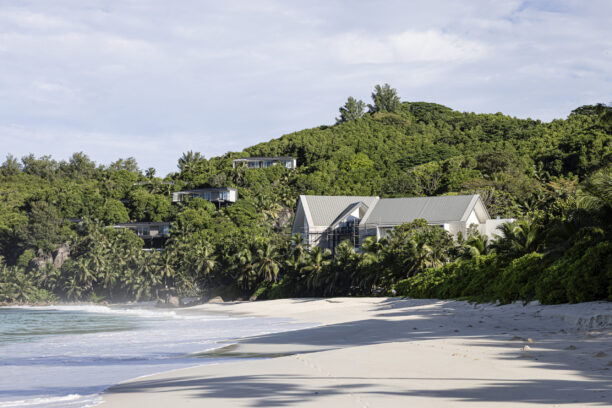
Today, just meters behind the beach is a high-end hotel resort owned by the National Corporation for Tourism and Hotels (NCTH), a publicly traded Abu Dhabi–based company. Branded under the luxury hotel company Cheval Blanc — owned by LVMH, the French multinational founded by one of the world’s richest people, Bernard Arnault — Cheval Blanc Seychelles offers private villas starting at just under $2,000 per night, with several disclosing prices only upon request.
At the time the project was conceived, the Seychelles Ministry of Tourism estimated that it could bring in nearly $150 million and create more than 300 jobs. Once operational, it was expected to generate up to $37 million in annual revenue.
“In an ideal world, if the hotel engages local suppliers and implements its sustainability program, the benefit should trickle down to the community,” wrote Sherin Francis, Seychelles Principal Secretary of the Seychelles Tourism Department.
Instead, the project has sparked a flurry of controversy on Mahé Island over allegations that it has violated numerous Seychellois environmental standards and regulations through the destruction of nesting habitats, the pollution of coastal wetlands, and threats to protected species. While the hotel officially opened last December, the government failed to investigate claims of ecological damage or demand that the Emirati owners and developers respond to such claims. LVMH declined to comment on this investigation.
Globally, the Seychelles is seen as a leader on environmental issues. Approximately 47 percent of its ecosystems, which range from mangrove forests to coral reefs, are protected. However, much of that conservation area is under threat from new tourism developments.
The Seychelles draws in visitors with the promise of elite escapism — high-end luxury resorts that boast uninterrupted views of aquamarine waters — rather than mass tourism in packed resorts. Locals worry, however, that the islands are changing. Tourism has increased by nearly 38 percent over the past decade. And new developments continue to pop up along the coastline, many of them owned and operated by companies or individuals from the United Arab Emirates.
“Seychelles has shifted in terms of demography over time. The country was once marketed as a high-end destination where romance was the predominant niche, alongside a few others. Today, the destination is dominated by small accommodation properties, which account for about 60 percent of the room stock,” wrote Francis. “As a result, Seychelles appeals to a wide range of demographics.
The Cheval Blanc project is not the first Emirati-backed development to cause environmental destruction in Mahé. In 2010, residents of a neighborhood called La Misère claimed that their water source had been tainted by sewage and diesel runoff from a construction site where Sheikh Khalifa bin Zayed Al Nahyan, the former president of the United Arab Emirates, was building a mountaintop palace. More than 8,000 residents demanded more than $10 million in compensation from Sheikh Khalifa and the Dubai-based construction company he had hired.
In 2019, NGOs publicly raised concerns over the construction of a Canopy by Hilton hotel on the site of an ecologically important wetland adjacent to Anse à la Mouche, another gorgeous beach. The project, which was developed by the Royal Development Company, a private, U.A.E.-based real estate manager, went ahead after Seychelles President Wavel Ramkalawan gave it his blessing at a 2021 press conference, during which he advocated for striking the right balance between conservation and development.
That balance is key for this small archipelago, which relies on high-end tourism to sustain its population. However, Seychellois authorities have looked the other way while Emirati developers have degraded the environment to build profitable luxury hotels and villas. The construction does not necessarily mean more jobs for locals. In many cases, the hotels are built by cheaper imported labor, with foreign workers currently making up at least a quarter of the island’s total population.
Seychellois critics worry that their country is being sold piecemeal to the U.A.E., which has become an increasingly important partner to the government of Seychelles, and has invested dozens of years and millions of dollars into securing outsized influence in the small island nation. The extent of this state capture continues to unfold with each new hotel development.
“They have no respect for nature. They don’t have respect for culture. They do what they want,” said the owner of a small family-run hotel in Mahé, who requested that his name be withheld for fear of retribution by the government.
“They have no respect for nature. They don’t have respect for culture. They do what they want.”
Owner of a small family-run hotel in Mahe, Seychelles
"Economically, the country has been captured — economically colonized"
Seychellois head of an international nongovernmental nonprofit
The Seychelles is an archipelago of 115 islands located in the Indian Ocean off the coast of East Africa. From the 1700s to the 1900s, it was ruled by the French and then the British before gaining independence in 1976.
Yet the country never fully escaped the influence of outside powers. In 1963, the United States built an air force satellite tracking station on land it had leased on Mahé, which eventually became the site of Sheikh Khalifa’s mountaintop palace. It abandoned the station in 1996 after the collapse of the U.S.S.R., but the departure created opportunities for other powers to gain a foothold in the country. China rushed in to build schools, hospitals, and low-income housing on the islands. Over the past several decades, the U.A.E. and other Persian Gulf states have become increasingly influential, constructing hotels, roads, and other infrastructure.
Proponents of the warm relationship between the Seychelles and the U.A.E. argue that the Gulf nation has helped fuel development across the islands. The Abu Dhabi Fund for Development, which funds projects in developing countries, has provided $53.1 million in grants and loans for projects ranging from hospital improvements to road and airport construction. The fund’s chairman is Sheikh Mansour Bin Zayed Al Nahyan, the U.A.E.’s current vice president and brother to President Sheikh Mohammed bin Zayed Al Nahyan. The Emiratis have also sent much-needed emergency aid to the Seychelles during times of crisis. These gestures have bought goodwill among many Seychellois, who say they appreciate the investment and economic growth that the Emiratis generate.
But the nation has also gained a reputation as a haven for dirty money. Corruption, money laundering, and shadowy shell companies are rampant, attracting everyone from Emirati princes and Chinese business tycoons to shady, low-level fraudsters.
May De Silva, Commissioner of the Anti-Corruption Commission Seychelles, declined to answer questions for this story posed to her in person at a global anti-corruption conference in 2024.
“Economically, the country has been captured — economically colonized,” said the Seychellois head of an international nonprofit operating in the archipelago. Like many others we spoke to, they declined to give their name for fear of retribution by the government. “All of this has been condoned, in some way, by our leaders.”
The relationship between Seychellois presidents and the U.A.E. has grown increasingly close over the years. When former President James Michel came to power in 2004, the country was in dire economic straits, and he especially courted investment from the Gulf. Michel became so close with the leaders of the U.A.E. that after resigning, he moved to Abu Dhabi, where he reportedly resides today.
Sitting President Wavel Ramakalawan won power in part due to his promise to tackle corruption. He has, in fact, been lauded for his anti-corruption stance and efforts to improve transparency and governance in the Seychelles. Under his administration, the country has maintained a strong position on Transparency International’s Corruption Perception Index, ranking as the least corrupt nation in Sub-Saharan Africa and placing above the U.S. in 2024. And there have been no substantial allegations directly implicating Ramkalawan in corruption.
Yet many citizens believe that Ramkalawan has fallen victim to the very corruption he pledged to combat. His frequent trips to the U.A.E. to meet with the royal family and his attendance in the V.I.P. box at flashy events such as the 2020 Abu Dhabi Grand Prix have drawn suspicion. In the run-up to the Seychelles presidential election in September 2025, local media outlets reported on Ramakalawan’s alleged corruption as his political opponents levied charges against him.
“[The Arabs] very quickly caught on to the weakness of President Ramakalawan. He was reeled in,” the same nonprofit source said.
Recent developments at Anse Intendance are a prime example. The land once belonged to George Harrison of the Beatles and his friend Peter Sellers, known for his role as Inspector Clouseau in the Pink Panther movie series. In 2018, Murban, a private investment office based in the U.A.E., purchased the property for $70 million.
In May 2021, Abu Dhabi–based Alpha Dhabi Holding took full ownership of Murban, and by January 2025 it had also secured a controlling stake in the National Corporation for Tourism and Hotels (NCTH). Alpha Dhabi is part of the International Holding Company, which is majority-owned by Royal Group, the family office of the Abu Dhabi royal family run by Sheikh Tahnoon bin Zayed Al Nahyan, brother of President Sheikh Mohammed.
Yet nowhere in the promotional materials of the Cheval Blanc hotel project–nor on travel blogs or official announcements–is the Al Nahyan family’s role in the venture openly acknowledged.
Neither Murban nor NCTH responded to requests for comment.
Emirati officials "very quickly caught on to the weakness of President Ramakalawan. He was reeled in."
Seychellois head of an international nonprofit
The Seychelles held its presidential elections on September 27, when Ramakalawan drew 46.4 percent of the vote, behind opposition leader Patrick, who drew 48.8 percent in a crowded field of candidates. As no candidate won a majority of the vote, the Seychellois return to the polls for a runoff October 9-11. Pre-election polls showed a relatively strong appetite for change and dissatisfaction with the current government. If Herminie wins, he will have to define his relationship with the UAE and carefully balance developmental needs with conservation of the Seychelles’ precious natural habitats.
One of the properties being built at the Cheval Blanc site on the island of Mahé in Seychelles on April 3, 2024. (Photo by Patrick Meinhardt.)
Before starting a building project in the Seychelles, a consultant registered with the Ministry of Agriculture, Climate Change and Environment must develop an environmental impact assessment (EIA) in accordance with Seychellois environmental laws and regulations. Developers are expected to adhere to the recommendations outlined in the EIA, with compliance monitored by the Ministry of Agriculture, Climate Change and Environment and a separate environmental consultant.
For Cheval Blanc Seychelles, that consultant is Nimhan Senaratne, who runs a private company called Eco Sol Consulting Ltd. While Senaratne is tasked with reporting any noncompliance to the Ministry of Agriculture, Climate Change and Environment, he says that he is paid by a project management company hired by the developer, not the government.
“It’s a deficiency with our system,” said Flavien Joubert, Minister for Agriculture, Climate Change and Environment. “The amount of money that is flowing between the EIA consultant and the proponent, I think we should also regulate that. If the consultant sees that this is a lucrative thing, of course, they will always err on the side of the developer, because they are earning.”
Murban’s EIA begins by noting the ecological importance of the native beach crest and wetlands around the hotel property and commits to safeguarding those environments “to ensure that minimal or zero environmental damages are done to the site.” Despite this, numerous breaches of the EIA have occurred since development commenced in 2020. And yet Joubert cannot name a single instance in which Murban has been fined or taken to court.
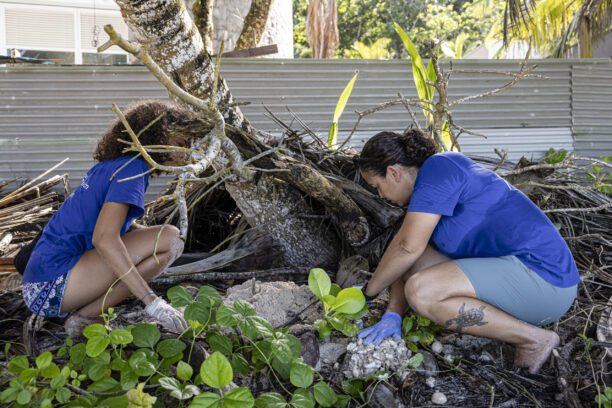
The first swathe of violations relates to the native beach crest where Didon was searching for sea turtle nests. The EIA acknowledges that the crest is a critical breeding ground for these endangered animals, which are protected by Seychellois law. However, an independent assessment conducted by Ameer Ebrahim, a marine ecologist and registered EIA consultant, found that the proposed resort footprint would “not only influence the coastal vegetation, but also cause disruption to nesting turtles along that beach, through additional noise and light pollution.”
The buffer zone between construction and the high-water mark is also an important space for Seychellois residents and tourists. Anse Intendance is a public beach, and original documentation for the property stipulated that a 30-meter band between the property and the high water mark be maintained at all times to allow the public free access. However, drone footage taken by Ebrahmi in July and August 2023 reveals a significantly diminished buffer zone — between six and 21 meters. “On a high tide (exceeding 2m), there is next to no corridor available for public access,” Ebrahim found.
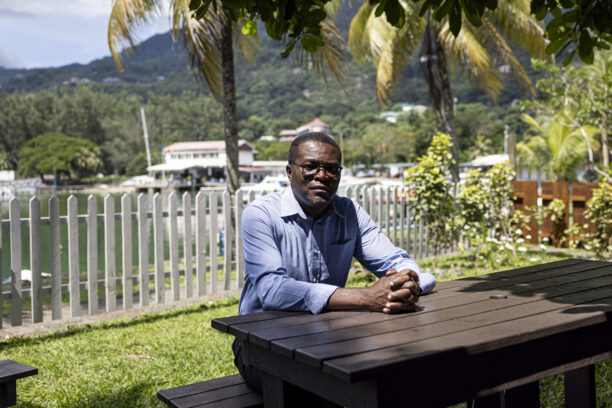
Environmental impact monitors are paid by developers, not the government.
"It's a deficiency within our system . . . of course, they will always err on the side of the developer, because they are earning.”
Flavien Joubert, Minister of Agriculture, Climate Change and Environment
A sign asking people to protect coral reefs and turtles is seen next to the Cheval Blanc construction site on the island of Mahe in Seychelles on April 3, 2024. (Photo by Patrick Meinhardt)
"That was the day I felt like a second-class citizen in my own country."
Virginia Hoareau Seaside peddler
Walking along the beach with Didon in April 2024 during the construction of Cheval Blanc Seychelles, the degradation of the vegetation was apparent. The band of trees and bush between the beach and the concrete construction site was sparse and thin; in some sections, it was almost entirely gone.
Mesh green fencing built to shield the construction site from view was erected close to the high-water mark. According to Ebrahim’s report, there were sightings of sea turtles trying futilely to dig under the fences to access their nesting grounds.
The Seychelles Planning Authority ordered that an unapproved stone wall in front of a villa where the public access way meets the beach be taken down last year. But several months later, a shorter wall appeared in the same location. The Seychelles Planning Authority declined to comment on the reconstruction of the wall.
In April 2024, the foundation of the original wall was still clearly visible, and smashed rocks and concrete littered the area next to the sign that warned visitors from violating sea turtle protections. Several vendors had set up stalls in the small shady clearing next to the sign. A man rented out beach chairs. Virginia Hoareau stood next to him, selling tourist trinkets at her makeshift wooden stall. “I had my license for craft,” she said. “All was good.”
Hoareau had been peddling her wares on the beach to earn money when an “Arab-like [man] came, like, with authority — like, not with good manners — and asked me who gave me authorization to be here.” The man, a representative of the Emirati development company, told Hoareau that she was on private property (she was not) and that she needed to leave.
“That was the day I felt [like] a second-class citizen in my country,” Hoareau said. She blames the government. “[They’re] giving the foreigners full authority on our country. They don’t give them what they should do and what they should not do.”
Hoareau now sells her wares on a different beach.
The Cheval Blanc hotel was also built on a coastal wetland. The dirt road leading to the beach runs through dark pools of standing water with patches of green vegetation growing on top. The air is sticky and humid. Insects buzz and birds scream. Hanging vines from tall trees along the water descend as if from the sky, evoking a tropical jungle. At the mouth of the wetland, inundations of salty seawater flow in and out, creating the perfect habitat for aquatic and semi-aquatic creatures to live and breed.
The wetland is hallowed ground for locals like Guy Esparon, a 72-year-old semi-retired conservationist who grew up near Anse Intendance. As a child, Esparon used to play in the wetlands. When he grew older, he walked with his dog, Buddy, every morning along the beachfront, picking up trash and microplastics.
Esparon told a local reporter that he saw a pump depositing liquid into the wetland several years ago. Hotel staff told him that it was wastewater from the construction site, but Esparon began to suspect that it was actually untreated wastewater being pumped from the staff quarters, which housed hundreds of foreign workers from countries like India and Bangladesh.
Over time, Esparon saw the wetland change. The water got darker. The smell grew danker. Duckweed covered the surface more thickly. Then, on Christmas morning in December 2022, Esparon arrived and found that the water had spilled out of the wetland and onto the beach, covering it with feces.
The EIA document for the hotel identified 131 species, among them 15 species of special conservation value living in the wetland at Anse Intendance, including two species of critically endangered mud terrapins. It committed, in no uncertain terms, to not intrusively modifying or impacting the wetland with any future development.
Yet when Karl Ammann, a Swiss wildlife photographer and the original owner of one of the hillside villas on the property, commissioned testing of the water from the wetlands last year, the results showed high levels of coliform bacteria, fecal coliforms, and E. coli, which indicates possible contamination of surface waters by sewage contamination.
Weeks later, the Ministry of Agriculture, Climate Change and Environment conducted its own water testing. It then served a notice of enforcement to Murban’s project manager, accusing the company of violating the Environmental Protection Act and ordering it to stop discharging waste into the environment, decommission its existing waste treatment plant and build a new one, and “develop a proposal to abate the pollution in the wetland.”
But the water pollution may have already done devastating damage to the animal population in the wetlands. According to an MCSS database, 123 yellow-bellied terrapins and 170 black mud terrapins lived in the Anse Intendance wetland prior to the construction of the hotel, along with 63 other terrapins that had been moved from another construction site that the request of the Ministry of Agriculture, Climate Change and Environment. The EIA suggested trapping and relocating this endangered population if any disruptive work needed to be performed.
On July 11 of last year, Joubert testified to Parliament that the terrapins had been relocated to another site. He later backtracked, admitting that the terrapins had not been moved. It’s not clear how many remain.
Construction workers clean the wetland inside the Cheval Blanc construction site on the island of Mahe in Seychelles on April 2, 2024. (Photo by Patrick Meinhardt)
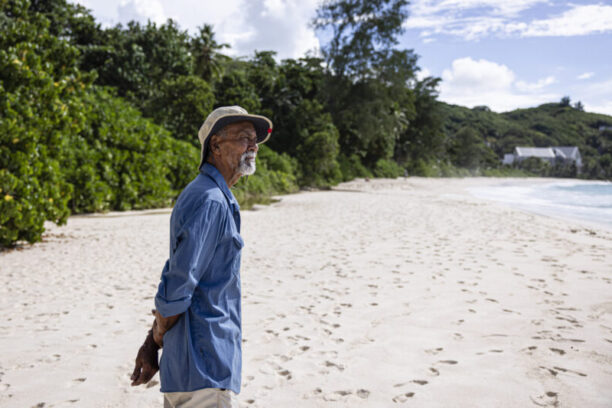
The wetland is hallowed ground for The wetland is hallowed ground for locals like Guy Esparon. (Photo by Patrick Meinhardt)
The failure to protect the environment at Anse Intendance and other sites in the Seychelles is, ultimately, a government failure.
“The Ministry, as a regulator, should be regulating these people, because they always take shortcuts,” said Nirmal Shah, CEO of the nonprofit conservation group Nature Seychelles. “We know the private sector is the private sector — it wants to make a profit — but we need to regulate it.”
That is not happening in the Seychelles. Relevant government bodies each point the finger at the other. During an interview, Angela Servina, CEO of the Seychelles Planning Authority, which monitors the construction of and can reject, halt, or even cancel a development that is in violation of Seychellois law, blamed the Ministry of Agriculture, Climate Change and Environment for failing to hold the developers to account if they violated the EIA.
In turn, Joubert blamed his own staff for providing him with incorrect information, making mistakes, or failing in their duty to monitor and report issues with the project.
Even more concerning is the fear across the island of speaking out against these development projects and the harm they are causing. Most sources requested to be off the record or unnamed because they were afraid of the consequences of speaking out.
When the Canopy by Hilton project was underway, a local resident, Marie-Therese Purvis, was an outspoken opponent of the felling of trees and environmental destruction caused by the construction. She was joined by many other concerned Seychellois, who showed up to protest against the development with signposts, started a Facebook group called “Save Anse à la Mouche,” and drafted a petition to save the wetlands, calling attention to the “U.A.E.-based Albwardy Investment” and its ownership of multiple Seychelles hotels.
Their demands were ignored. During a press conference, President Ramkalawan defended the development and reportedly publicly humiliated Purvis. She declined to comment for this story.
Intimidation tactics are effectively deterring other Seychellois from speaking openly about the country’s relationship to the U.A.E. Back in April 2024, a muckraking journalist named Ralph Volcere was arrested for criminal trespassing and held by the government after he filmed a U.A.E. cargo plane unloading at the Seychelles International Airport. Volcere pointed to the incident as an example of how the government was resorting to public intimidation to quash any pushback against the nature of its relationship with the U.A.E.
“Nobody in that government stands up to Wavel, because they wanted to be ministers with perks, with special pensions, with good gratuity, with a big car, and they are enjoying the life,” said Volcere, who ran for President himself in last month’s election. “The Emirates, now, they own our government through our president…and there’s nothing that they will ask Wavel and that he will not give them…They are his master.”
This trend threatens not only ongoing developments like Anse Intendance, but also future developments.
At the southern tip of the island is one of Mahé’s hidden treasures — a stunning inlet called Police Bay. It’s completely wild, with wetlands and thick vegetation leading to an untouched beach. The privately owned land was earmarked by its owner, Loomington Investments, to become yet another luxury marina resort. According to the Pandora Papers, Sheikh Hazza bin Zayed Al Nahyan, a younger brother of the president, is a major shareholder of Loomington Investments.
The public mobilized against the project, and in 2017, a group called the Grand Police Citizens Initiative managed to convince the Seychelles Cabinet of Ministers to commit to engaging with the owners to have the land returned to the government and declared a protected area. It felt like a win for the activists, and the beach still stands untouched — for now. When asked whether he would commit to blocking any proposed development at Police Bay until the end of his term, Joubert demurred.
“I don’t think it would be right for me to make such a statement,” he said. “I would err on the side of caution, and whatever happens there, I would insist that we try and preserve as much as possible and also try and limit the extent of any development there.”
Rassin Vanier contributed to this report.
Reporting for this story was supported by a grant from Journalists for Transparency.
About The Author

Neha Wadekar
Neha Wadekar is an independent multimedia journalist reporting across the globe. She reports at the intersections of climate, gender, conflict and crisis, and human rights.
Wadekar’s written and video work has been published in The New York Times, The Washington Post, The New Yorker, The Atlantic, The Wall Street Journal, The Economist, PBS NewsHour, the Los Angeles Times, The Guardian, CNN, and others.
She has received fellowships from the Pulitzer Center, the United Nations Foundation, The Fuller Project, the Overseas Press Club, the International Women’s Media Foundation, Journalists for Transparency, and The GroundTruth Project.
Wadekar is originally from Boston. She attended Tufts University and received a master’s in journalism from the University of Southern California, Annenberg School of Journalism.
Subscribe



© 100Reporters 2026. All rights reserved.